
What Is a Logbook Service? Everything You Need to Know
Whether you've just bought a new car or you've noticed your next service is due, you've probably wondered what a logbook service actually involves. Many drivers assume they must return to the dealership, while others aren't sure what technicians check or whether missing a service will affect their warranty.
A logbook service follows the manufacturer's recommended maintenance schedule for your specific vehicle. Rather than carrying out the same checks on every car, your mechanic performs the inspections, adjustments and replacements required at your vehicle's current age or kilometre interval.
Understanding how logbook servicing works helps you protect your warranty, maintain your vehicle's reliability and avoid unnecessary repair costs.
What Is a Logbook Service?
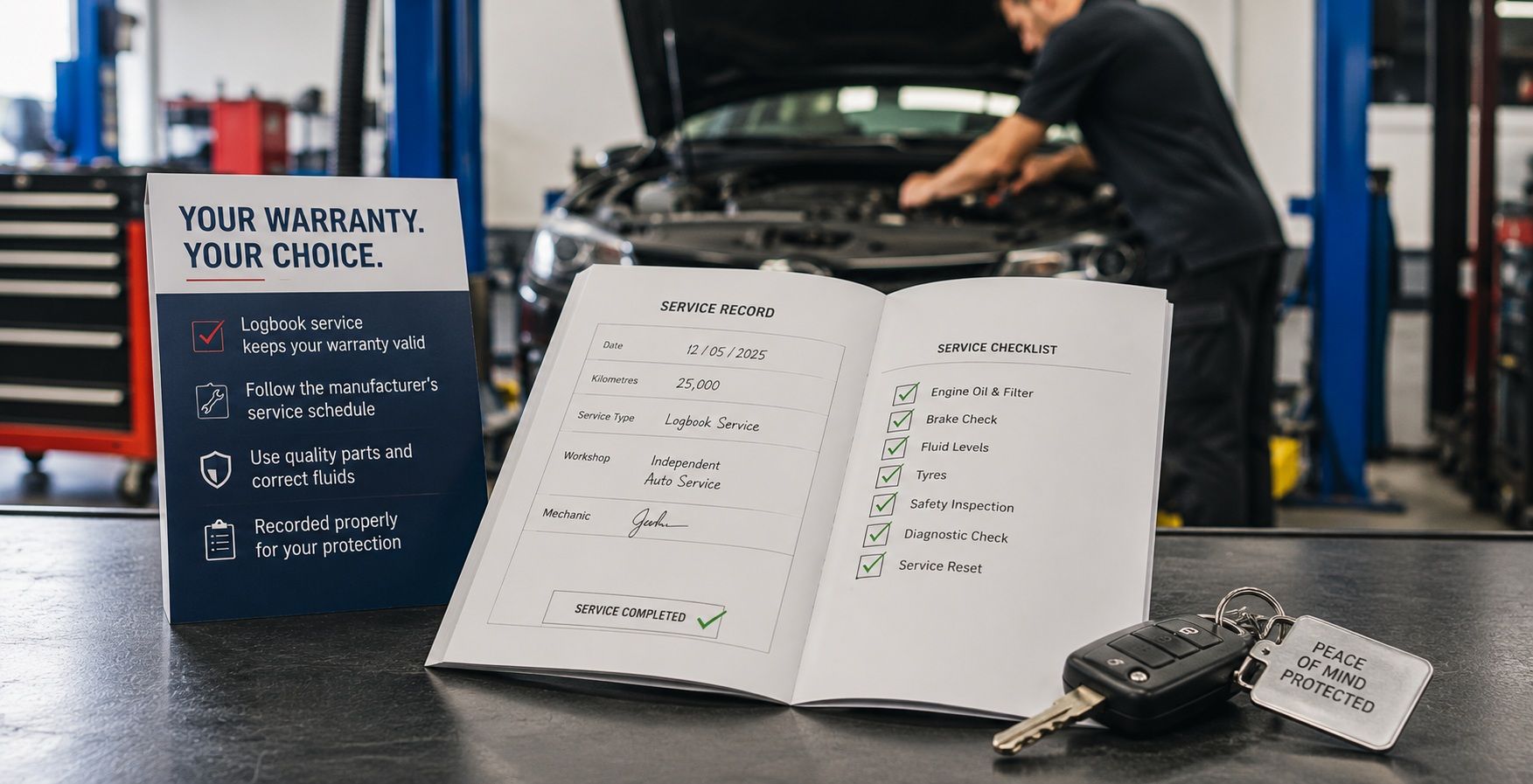
A logbook service is a scheduled service completed according to your vehicle manufacturer's specifications. Every make and model has its own maintenance schedule, which is outlined in the owner's handbook or service logbook.
During each scheduled service, your mechanic performs specific inspections and maintenance items recommended for that particular service interval. This ensures your vehicle continues to operate safely, efficiently and reliably.
Unlike a basic oil change, a logbook service follows a detailed checklist designed specifically for your vehicle.
H2: What Does a Logbook Service Include?
The exact tasks depend on your vehicle and the service interval, but a logbook service commonly includes:
- Engine oil and oil filter replacement
- Fluid level checks and top-ups
- Brake inspection
- Tyre inspection and pressure check
- Steering and suspension inspection
- Battery testing
- Drive belt inspection
- Air filter inspection or replacement
- Cabin filter inspection
- Cooling system inspection
- Lights and electrical system checks
- Diagnostic scan where required
Some major services also include spark plug replacement, transmission servicing, coolant replacement and additional manufacturer-specified maintenance items.
H2: How Often Should a Logbook Service Be Done?
Your manufacturer determines when each service is due.
This is usually based on either:
- Kilometres travelled
- Time since the previous service
For example, your vehicle may require servicing every 10,000 to 15,000 kilometres or every 12 months, whichever comes first. Even if you drive very little, servicing should still be completed within the recommended time period because engine oil, fluids and other components naturally deteriorate over time.
H2: Does a Logbook Service Keep Your Warranty Valid?
Yes. Under Australian Consumer Law, you do not have to return to the dealership to maintain your new car warranty.
An independent licensed mechanic can perform your logbook service provided they:
- Follow the manufacturer's servicing schedule
- Use quality parts that meet manufacturer specifications
- Use the correct oils and fluids
- Record the completed service correctly
This allows vehicle owners to choose a trusted independent workshop without affecting their warranty.
H2: How Long Does a Logbook Service Take?
Most logbook services take between 2 and 4 hours, although the exact time depends on:
- Vehicle make and model
- Service interval
- Additional repairs required
- Parts availability
Major scheduled services generally take longer than minor services because more components require inspection or replacement.
If additional faults are discovered during the inspection, your mechanic will normally contact you before carrying out any extra work.
H2: What Happens If You Miss a Logbook Service?
Delaying a scheduled service can increase wear on important components and may lead to more expensive repairs later.
Missing multiple scheduled services can also:
- Reduce engine performance
- Increase fuel consumption
- Accelerate component wear
- Reduce resale value
- Create warranty complications if maintenance requirements haven't been met
If you've missed a scheduled service, it's usually best to book your vehicle in as soon as possible.
H2: Is a Logbook Service Worth It?
Absolutely. Regular logbook servicing helps keep your vehicle performing as the manufacturer intended while identifying small problems before they become major repairs.
Benefits include:
- Maintains warranty requirements
- Improves reliability
- Extends engine life
- Helps retain resale value
- Improves safety
- Reduces the risk of unexpected breakdowns
H2: Book Your Next Logbook Service in Darwin
At Auto Tune Mechanical, we carry out manufacturer-approved logbook servicing for most makes and models using quality parts, manufacturer-approved oils and modern diagnostic equipment.
Whether your vehicle is due for its first scheduled service or a major service, our experienced technicians can complete the work while helping you maintain your warranty. Book your next logbook service with our Darwin team today.